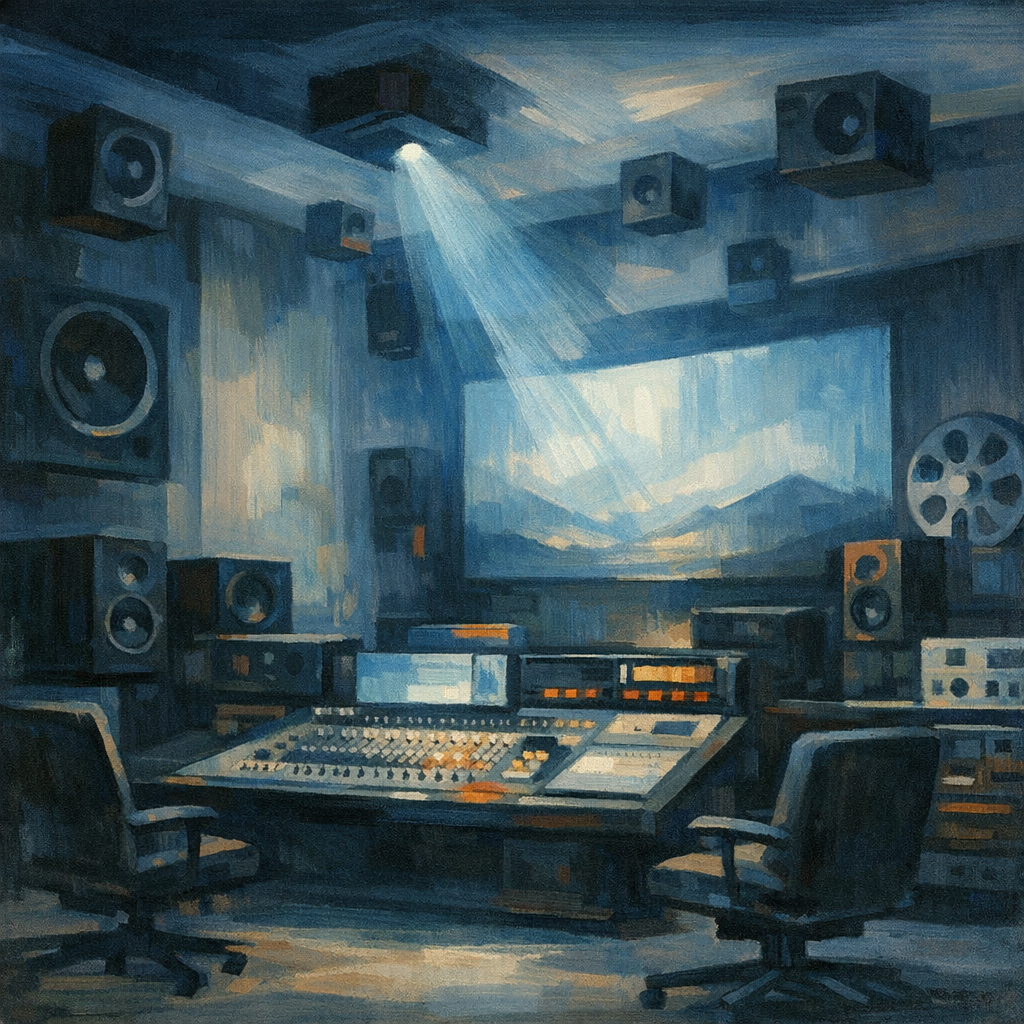
Dolby Atmos mixing is no longer a boutique add-on for prestige releases; it is rapidly becoming the format that exposes whether an engineer truly understands translation, space, and playback reality. The biggest mistake in 2026 is not ignoring immersive audio altogether, but treating it like a flashy speaker demo instead of a serious delivery format for Apple Music, TIDAL, Amazon Music, film, games, and branded content. If your Dolby Atmos mix collapses in binaural playback, the problem is not the format—it is the workflow.
Table of Contents
- Why Dolby Atmos Mixing Matters More Than Ever
- The Real Problem: Most Atmos Mixes Are Built for the Wrong Listener
- How Streaming Platforms Changed the Rules
- The Best Dolby Atmos Mixing Workflow in 2026
- Tools, DAWs, and Delivery Specs That Actually Matter
- What Music, Post, and Game Audio Can Learn from Each Other
- How to Know When to Bring in a Specialist
- Frequently Asked Questions
Why Dolby Atmos Mixing Matters More Than Ever
Immersive audio is now judged less by novelty and more by consistency. That is a major shift. Early Atmos conversations were dominated by speaker count, room diagrams, and cinematic spectacle. Now the market is driven by what happens on everyday devices: AirPods, soundbars, mobile phones, TVs, gaming headsets, and car systems that virtualize multi-dimensional playback.
That change has raised the bar for engineers. A modern Dolby Atmos mix must deliver scale without losing emotional focus. It must feel expansive on a calibrated speaker rig, coherent in binaural render mode, and commercially competitive on streaming platforms that normalize loudness and flatten the differences between “impressive” and “overhyped” mixes very quickly.
The winners are not the mixers who throw elements into the ceiling just because they can. The winners are the ones who understand intent. Atmos works best when it clarifies arrangement, protects vocal storytelling, enhances transitions, and uses motion sparingly enough that movement still means something.
This is also why the line between music production and post-production keeps shrinking. The same spatial thinking that improves a chart single can strengthen a film stem layout, a streaming concert release, or a branded XR experience. At DPM, that crossover matters because DPM Production’s audio post-production services sit exactly where technical delivery and creative impact need to meet.
Atmos is no longer optional for premium releases
Major labels, independent artists, film distributors, and streaming-first content creators increasingly expect immersive deliverables. Apple Music normalized the idea that a release can have a dedicated spatial version. TIDAL and Amazon Music have reinforced listener expectations. In parallel, Netflix, gaming platforms, and XR projects have made object-based audio more familiar to audiences who may never use that terminology but instantly recognize depth and realism when they hear it.
If your production pipeline cannot support immersive audio, you are not future-proofing your catalog. You are quietly limiting its value.
The Real Problem: Most Atmos Mixes Are Built for the Wrong Listener
The uncomfortable truth is that many Dolby Atmos mixes are still optimized for the most expensive playback scenario and barely interrogated for the most common one. That is backwards. Most listeners will hear your work through binaural rendering, downmixed speaker virtualization, or imperfect consumer systems—not inside a perfectly tuned 7.1.4 room.
Too many engineers still confuse “more space” with “better immersive design.” That is how you end up with disconnected vocals, exaggerated rear placements, or low-end energy that feels powerful in-room but unstable in headphones. Atmos is not a permission slip for chaos. It is a framework for better prioritization.
Binaural translation is the real battlefield
For music especially, headphone playback often determines whether an immersive release succeeds. Apple Spatial Audio popularized the experience, but it also exposed weak decisions fast. If the vocal image becomes vague, if cymbals turn brittle, or if key emotional elements feel detached from the listener, the production has not “gone immersive”—it has simply lost focus.
That is why object assignment, binaural render settings, bed management, and automation strategy matter so much. The right choice is not always the most dramatic one. Sometimes a static bed with carefully chosen object moments will outperform a hyperactive mix full of movement that distracts from the song.
The center of gravity still matters
Even in immersive music, listeners need orientation. Lead vocals, kick, snare, bass foundation, and central hooks usually benefit from a stable front-facing or near-center presentation. Height and rear information can then enhance contrast, intimacy, and drama rather than replacing the song’s core identity.
The best Atmos mixers understand restraint. They know that immersive impact comes from contrast: narrow versus wide, dry versus diffuse, grounded versus elevated, static versus moving. Without that balance, every trick becomes wallpaper.
An Atmos mix that only impresses in the studio is not finished; it is half-tested.
— DPM Production
How Streaming Platforms Changed the Rules
Streaming did not just expand distribution. It changed how engineers should think about deliverables, loudness, and audience expectations. Apple Music, TIDAL, and Amazon Music each helped push immersive audio into mainstream listening habits, but they also made one fact impossible to ignore: your mix is now competing in a translation economy.
That means the glamorous part of Atmos—objects, height, envelopment—must be matched by disciplined quality control. Engineers need to monitor re-renders, fold-down behavior, metadata integrity, and platform-specific presentation. A mix that sounds sensational in a mastering room but arrives inconsistently across devices is not a premium product.
Platform behavior matters more than marketing labels
Many artists assume that “Spatial Audio,” “Dolby Atmos,” and “immersive mix” mean the same listener experience everywhere. They do not. Device chain, renderer implementation, headphone processing, and app behavior all affect the final result. That is why professional review across multiple playback environments is essential.
For teams preparing a catalog or new release slate, tools such as the Dolby Atmos Converter can support workflow efficiency, but conversion alone is not the creative answer. A great stereo mix does not automatically become a great Atmos mix just because the format wrapper changes.
Delivery discipline separates professionals from enthusiasts
Atmos is often discussed as a creative frontier, but in practice it is also a delivery discipline. Metadata, ADM BWF management, speaker layout validation, and renderer compliance all matter. So do versioning decisions: explicit, clean, instrumental, TV mix, M&E, trailer versions, and platform-specific requirements.
The table below summarizes why delivery awareness is now inseparable from immersive mixing:
| Platform / Context | Common Playback Reality | Key Mix Priority | Main Risk |
|---|---|---|---|
| Apple Music Spatial Audio | Headphones, earbuds, mobile devices | Binaural translation and vocal focus | Diffuse imaging and disconnected lead elements |
| TIDAL Dolby Atmos | Mixed device ecosystem, hi-fi listeners | Detail, depth, and tonal consistency | Overhyped width masking arrangement clarity |
| Amazon Music Unlimited | Smart speakers, consumer devices, headphones | Robust fold-down behavior | Low-end instability across playback chains |
| Netflix / long-form post | TVs, soundbars, home theaters | Dialogue intelligibility and scene translation | Atmosphere overpowering narrative clarity |
| Games / VR / XR | Interactive headphone and speaker rendering | Positional logic and responsiveness | Static cinematic thinking in dynamic environments |
For anyone evaluating how their work holds up in the real world, studying our portfolio is useful because immersive excellence is always contextual. A music release, a trailer, and an XR experience do not ask the same questions of the mix engineer.
The Best Dolby Atmos Mixing Workflow in 2026
There is no single “correct” Atmos workflow, but there is a clear line between disciplined workflows and expensive improvisation. The most reliable approach starts before the first object pan. If the arrangement is overcrowded, if the reverbs are already fighting the vocal, or if the stems are poorly organized, Atmos will reveal the mess rather than solve it.
1. Start with arrangement logic, not speaker excitement
Ask what deserves dimensional emphasis. Is the song driven by a centered vocal narrative? Is it groove-first, texture-first, or cinematic? Which elements can move without weakening the hook? Which layers should feel enveloping rather than directional? Atmos rewards decisions that serve the composition.
2. Build a stable bed before chasing movement
A strong bed establishes trust. Once the listener understands where the song “lives,” object motion becomes expressive instead of random. Beds are not a compromise; they are often the anchor that makes immersive playback emotionally readable.
3. Use objects to create hierarchy
Objects should emphasize contrast, spotlight moments, transitions, ad-libs, ear-candy details, percussion gestures, or environmental elements. If everything is an object, nothing feels special. Over-objectification is one of the most common signs of an immature Atmos mix.
4. Check binaural render modes early, not at the end
Many avoidable problems come from leaving headphone review too late. Monitor how near, mid, and far render behaviors affect the perception of key elements. Revisit reverbs, delays, and high-frequency placements if the mix becomes brittle or vague on headphones.
5. Manage low end conservatively
Low-frequency energy can feel massive in immersive environments, but it is also where translation breaks quickly. Keep kick and bass relationships disciplined. Be careful with wide low-end decorrelation. Test fold-downs. A huge Atmos low end that falls apart on consumer playback is not impressive—it is unfinished.
6. Master with translation in mind
Atmos mastering is not stereo mastering with extra channels. The goal is to preserve dimension, maintain tonal integrity, and protect platform compatibility. That often means rejecting habits that were rewarded in stereo-era loudness chasing. Spatial depth needs breathing room.
Teams working in calibrated rooms with reliable monitoring will naturally make better calls. If your setup is not there yet, collaborating with specialists in our professional studio can save enormous revision time and prevent costly distribution mistakes.
Tools, DAWs, and Delivery Specs That Actually Matter
The tool conversation around Dolby Atmos mixing is often polluted by brand tribalism. Pro Tools users dismiss Logic Pro. Logic users oversimplify Nuendo. Plugin debates consume hours while room calibration and monitoring discipline get ignored. This is exactly backwards.
DAW choice matters, but implementation matters more
- Pro Tools Ultimate remains a dominant option for professional post-production, stem-heavy projects, and integrated Atmos workflows.
- Nuendo is exceptionally strong for game audio, post, immersive routing, and complex deliverables.
- Logic Pro lowered the barrier to entry for music creators and helped mainstream Atmos authoring, especially for Apple-centered release workflows.
- Ableton Live, Reaper, and hybrid workflows can contribute creatively, but final delivery often still benefits from dedicated immersive finishing stages.
The real differentiators are room correction, monitoring confidence, panning literacy, metadata handling, and disciplined session structure. A glamorous plugin chain will not fix poor spatial priorities.
Plugins should solve problems, not advertise ambition
Useful immersive tools include reverbs that preserve front-back clarity, analyzers that help visualize energy distribution, render-check solutions, and reliable loudness / compliance metering. Ambisonics tools, binaural processors, and room simulation software can be extremely effective when used with intention. They become dangerous when engineers use them to fake depth that should have been designed in the mix.
Specialized capture tools also matter. For acoustic spaces, ambience work, and convolution workflows, the IR Studio Recorder is directly relevant to anyone building believable immersive environments rather than generic plugin wash.
Specs are boring until they ruin a release
ADM BWF packaging, loudness considerations, bed/object allocation, channel naming discipline, true peak awareness, and renderer validation may not be glamorous topics, but they are exactly where projects go sideways. Technical sloppiness is still one of the fastest ways to make a premium mix look amateur.
That is also why so many creators eventually look beyond isolated tools and toward complete finishing ecosystems, including our audio tools and products and specialist support from our team of specialists.
What Music, Post, and Game Audio Can Learn from Each Other
Some of the most interesting progress in Dolby Atmos mixing is happening at the edges between industries. Music can learn narrative discipline from film post. Film can learn emotional boldness from records. Game audio and XR can teach both sectors that immersion is not just about width or height—it is about responsiveness and believable perspective.
Music should borrow narrative discipline from post
Post engineers are often ruthless about clarity. Dialogue must survive. Scene perspective must make sense. Transitions must support storytelling. Music mixers entering Atmos benefit from adopting some of that rigor. Ask not only “Does this sound big?” but also “Does this placement communicate the song better?”
Post should borrow textural courage from music
Conversely, post can become overly conservative. Some long-form and branded mixes leave emotional dimension on the table because they fear drawing attention to space. Used well, immersive design can deepen intimacy, tension, and realism without becoming theatrical for its own sake.
Games and XR expose weak static thinking
Interactive formats punish fake immersion quickly. If spatial design is not logically connected to the user’s perspective, movement, and environment, it feels decorative. That lesson matters for linear media too. Immersion should feel motivated, not imposed.
If you want to continue exploring where audio post, immersive storytelling, and production technology intersect, read more on our blog for deeper industry analysis and workflow insights.
How to Know When to Bring in a Specialist
There is a myth that serious Atmos work is only for major labels and giant post houses. That is outdated. Independent artists, agencies, filmmakers, developers, and content studios increasingly need immersive deliverables. What they do not need is to waste weeks pretending the learning curve is smaller than it is.
You should bring in a specialist when the release matters more than the experiment. That includes projects where platform delivery must be flawless, where the audience will notice poor headphone translation, where the room is not calibrated well enough for confident decisions, or where the mix needs to support both creative ambition and strict technical compliance.
Warning signs that your Atmos project needs outside help
- The binaural version feels weaker than the stereo mix.
- Low end changes dramatically between systems.
- Lead vocals lose focus when objects or height elements increase.
- Your session organization makes versioning and revisions painful.
- You are relying on presets because you do not trust your room.
At that point, the smartest move is not more guesswork. It is collaboration. You can get in touch with our team to discuss whether your project needs Atmos mixing, mastering, conversion support, post-production finishing, or a broader immersive strategy.
Frequently Asked Questions
Q: What is Dolby Atmos mixing in simple terms?
Dolby Atmos mixing is an audio production method that places sounds in a three-dimensional space instead of only left and right. It combines channel-based beds with movable audio objects, allowing mixes to feel wider, taller, and more immersive on compatible systems and binaural headphone playback.
Q: Is Dolby Atmos mixing only useful for music?
No. Dolby Atmos mixing is widely used in film, television, trailers, games, VR, XR, and branded content. The format is especially valuable anywhere spatial realism, emotional immersion, or precise positional audio improves the audience experience.
Q: Do I need a full speaker room to create a good Atmos mix?
A calibrated immersive room is still the most reliable environment for critical Dolby Atmos mixing decisions. However, headphone-based workflows and hybrid setups can be useful for editing, preparation, and creative drafting, as long as final quality control and delivery checks happen in a properly monitored professional environment.
Q: How is Dolby Atmos different from stereo mastering?
Stereo mastering focuses on a two-channel presentation, while Dolby Atmos mastering must preserve spatial relationships, object behavior, and translation across multiple playback types. It requires different monitoring, different technical checks, and a stronger emphasis on binaural and multi-device consistency.
Q: Which streaming platforms support Dolby Atmos music?
Apple Music, TIDAL, and Amazon Music are among the major music platforms that support Dolby Atmos releases. Actual listener experience varies by device, headphones, app implementation, and playback chain, so platform support does not guarantee identical results everywhere.
Q: Why does my Atmos mix sound impressive in speakers but weak on headphones?
That usually points to binaural translation issues. Common causes include poor object priorities, excessive diffuse effects, unstable low end, or render settings that push important elements too far from the listener’s perceived center. Headphone review should be part of the workflow from the start, not only the final check.
The future of immersive audio will not be decided by marketing slogans or plugin screenshots. It will be decided by whether mixes translate, whether they serve the content, and whether creators stop treating Dolby Atmos like a visual effect for the ears. The format has matured. The workflows must mature with it.
For artists, producers, content studios, and post teams, that means building immersive releases with the same seriousness applied to any premium deliverable: proper monitoring, intentional spatial design, robust quality control, and technical discipline from session prep to final export. That is where experienced collaboration makes the difference, especially when a project must work equally well for streaming platforms, cinematic environments, and headphone-first audiences.
DPM Production works at that intersection of creative ambition and technical execution. Whether you are planning your first Atmos release, refining a catalog strategy, or solving translation problems across music, post, or interactive media, the right support can turn immersive audio from a risky experiment into a reliable advantage.
Ready to Take Your Audio to the Next Level?
Whether you’re mixing in Dolby Atmos for the first time or need expert spatial audio post-production for your next project, DPM Production has the studio, tools, and expertise to deliver world-class results.
👉 Explore Our Services
|
👉 Contact Us Today
|
👉 See Our Studio