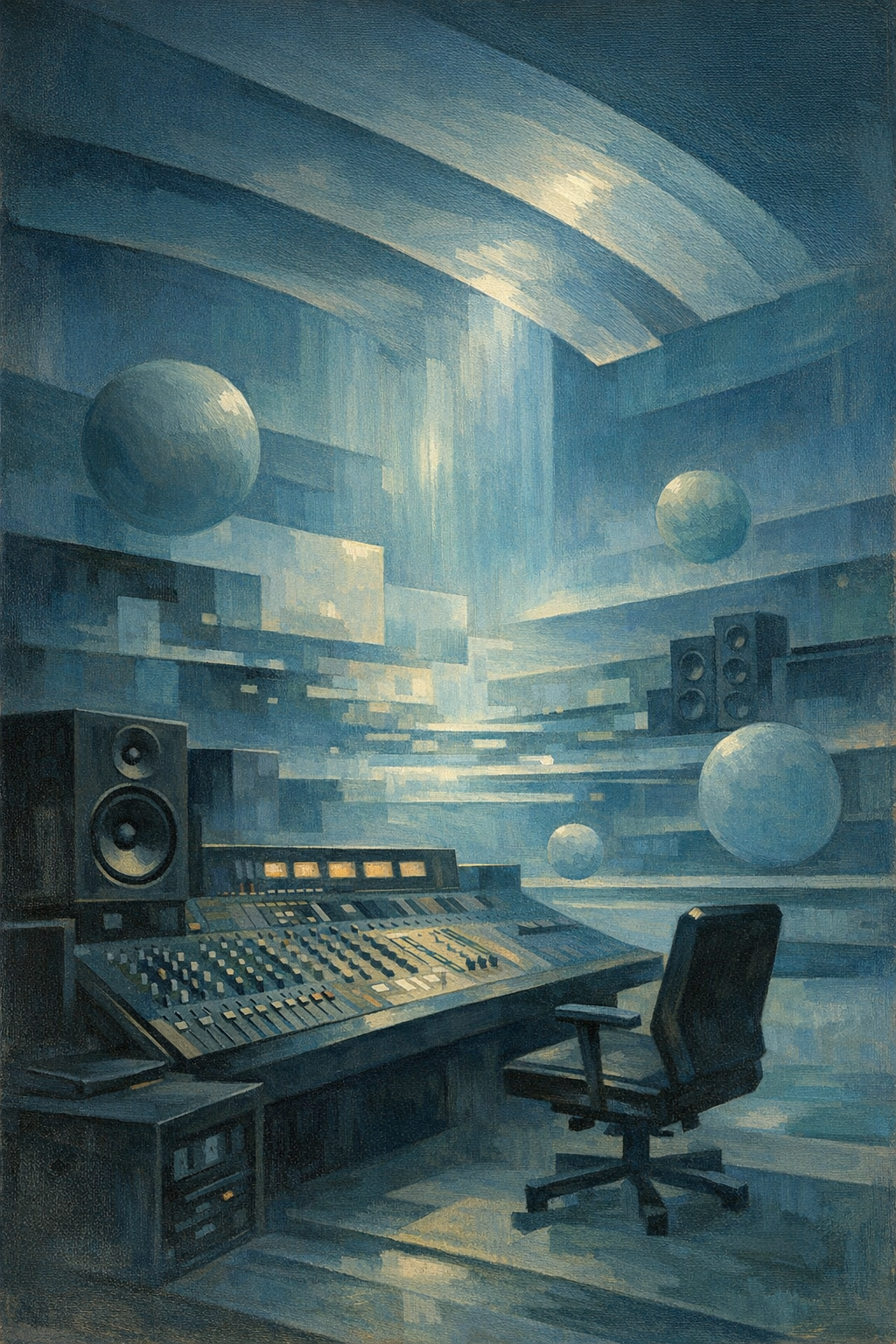
Dolby Atmos mixing is no longer a luxury format for superstar releases and Hollywood budgets. It has become a practical, commercial, and increasingly unavoidable part of modern music production, audio post-production, and immersive content delivery. If your workflow still treats stereo as the only “real” master, you are already behind where the market is heading.
Table of Contents
- Why Dolby Atmos Mixing Has Moved Into the Mainstream
- What Actually Makes a Great Atmos Mix
- The Streaming Reality: Apple Music, Tidal, Amazon, and Beyond
- Tools, DAWs, and Plugins Shaping Modern Spatial Audio
- Atmos for Film, Games, VR, and Interactive Media
- Common Dolby Atmos Mixing Mistakes That Ruin Translation
- How to Build a Workflow That Is Actually Deliverable
- Frequently Asked Questions
Why Dolby Atmos Mixing Has Moved Into the Mainstream
The industry argument is over. Dolby Atmos is not a novelty, and it is not just a marketing badge slapped onto reissues. It has become a serious production format because three forces finally aligned: streaming platform support, better production tools, and listener familiarity with headphones-based spatial playback.
Apple Music helped push the conversation into the mainstream by presenting spatial audio as a consumer feature rather than an engineering niche. Tidal and Amazon Music reinforced that shift, while Netflix, Prime Video, and major game engines normalized immersive audio expectations across entertainment. Once consumers hear width, height, and movement as part of everyday playback, flat stereo starts feeling exactly what it is: limited.
That does not mean stereo is dead. It means stereo is no longer enough on its own for many releases. Labels, distributors, and content owners increasingly want both stereo and immersive deliverables. Artists want a format that feels premium. Directors want space that supports storytelling. Brands want experiences that separate them from generic content. This is why DPM Production’s audio post-production services are relevant across music, broadcast, branded media, and cinematic sound.
The commercial shift is bigger than many studios admit
Too many studios still talk about Atmos as if it were an “extra” service. That is outdated thinking. Immersive deliverables are quickly becoming part of the baseline expectation for premium projects. Even when a client does not request Dolby Atmos by name, they often ask for “spatial audio,” “head-tracked sound,” “Apple-compatible immersive versions,” or “cinematic headphone playback.” Those requests point to the same broader market movement.
The real reason Atmos matters is not hype. It is differentiation. In crowded platforms, sound that creates depth, elevation, and intentional placement can hold attention longer and create stronger emotional impact. That matters for songs, trailers, games, documentaries, and branded experiences alike.
Why 2026 is a different moment than 2021
The early years of Dolby Atmos mixing were dominated by experimentation, inconsistency, and a lot of bad translation. Engineers were learning. Clients were unsure. Platforms were still shaping delivery expectations. Now the standards are more mature, the monitoring options are better, and the creative language is clearer. The conversation has shifted from “Should we do Atmos?” to “How do we do it well?”
Immersive audio is not winning because it is fashionable. It is winning because it gives creators more narrative control and gives audiences a more memorable experience.
— DPM Production
What Actually Makes a Great Atmos Mix
A great Dolby Atmos mix is not a stereo mix with sounds thrown into the ceiling. That lazy approach is exactly why some immersive releases feel gimmicky and why skeptics still complain about the format. A proper Atmos mix starts with intent: what deserves focus, what benefits from space, and what should remain grounded.
Objects are not the goal; storytelling is
Atmos allows mixers to place sounds as beds and objects, but technology alone does not create immersion. The best Atmos mixes use movement and elevation selectively. Lead vocals often need stability and emotional authority. Percussion can benefit from width and dimensional layering. Background vocals, synth textures, reverbs, and FX tails often gain the most from the expanded field.
For post-production, the same principle applies. Dialogue must remain clear. Foley should support realism. Ambiences should build believable space. Music should enhance, not swamp, narrative focus. This is where experienced judgment matters more than plugin presets or format logos.
Height has to mean something
Many weak Atmos mixes misuse the height channels as decoration. Height should contribute to realism, emotional lift, or contrast. In a concert piece, height can support crowd energy and venue realism. In sound design, it can create scale, unease, or motion. In a film mix, it can help define environmental perspective. If the listener would not miss the height information when it is removed, it probably was not doing enough meaningful work.
Translation matters more than spectacle
Most listeners will experience Atmos on headphones, soundbars, smart TVs, or compact speaker systems. Very few will sit in a perfectly calibrated theatrical environment. That means translation is not optional. It is the central challenge. A mix that only works in a large room is not a successful modern mix.
That is why room design, monitoring discipline, binaural render checks, and format-aware mastering decisions matter. If you want to hear how disciplined immersive decisions translate across applications, our portfolio offers a practical sense of how professional audio work should hold up in real listening contexts.
The Streaming Reality: Apple Music, Tidal, Amazon, and Beyond
One of the biggest mistakes in Dolby Atmos mixing is pretending every platform behaves the same. They do not. Playback environments, loudness behavior, consumer devices, and metadata handling can differ enough to change the listener’s experience in ways that matter.
Platform support changed the business case
Apple Music made immersive music feel mainstream. Tidal helped maintain a premium perception around high-quality delivery. Amazon Music widened access. Video platforms such as Netflix and Prime Video kept Atmos associated with cinematic value. The result is simple: clients now connect immersive audio with professional credibility.
That does not mean every release needs aggressive spatialization. It means every serious production team should understand the format’s strengths, limitations, and delivery expectations.
Practical platform differences
| Platform / Context | Common Listener Environment | Atmos / Spatial Priority | Main Mixing Consideration |
|---|---|---|---|
| Apple Music | Headphones, AirPods, mobile devices | Very high | Binaural translation and vocal focus are critical |
| Tidal | Hi-fi listeners, headphones, home playback | High | Clarity, depth, and dynamic balance matter more than gimmicks |
| Amazon Music | Smart speakers, headphones, consumer devices | High | Ensure broad compatibility and stable spatial image |
| Netflix / Prime Video | TVs, soundbars, home theater systems | Very high | Dialogue intelligibility and cinematic environment design |
| Games / XR | Headphones, VR headsets, interactive systems | Context-dependent | Interactivity, localization accuracy, and engine integration |
Do not confuse format delivery with format success
It is easy to generate an Atmos file. It is much harder to create an Atmos experience that survives platform playback, consumer hardware, and artistic scrutiny. Technical compliance is not the same thing as a compelling release. That is why conversion tools need to support, not replace, critical listening and informed decisions. When fast and accurate deliverable preparation is needed, the Dolby Atmos Converter can streamline parts of that process without pretending automation alone solves quality.
Tools, DAWs, and Plugins Shaping Modern Spatial Audio
The toolset for immersive work is better than it has ever been, but better tools also expose weak engineering faster. DAWs now offer more robust workflows for object-based and surround-capable production, yet no software can fix poor arrangement choices, uncontrolled dynamics, or an unclear creative brief.
Which DAWs actually matter?
Pro Tools remains a serious standard in post-production and large-format mixing environments for good reasons: routing power, collaboration familiarity, and integration with established facilities. Nuendo is exceptionally strong for post, game audio, and complex immersive workflows. Logic Pro made spatial production more accessible for music creators, especially within the Apple ecosystem. Ableton Live and FL Studio are still often used in production stages, though final immersive finishing may move elsewhere depending on project demands.
- Pro Tools: excellent for professional post-production, film, and structured Atmos sessions
- Nuendo: highly capable for immersive audio, game pipelines, and advanced routing
- Logic Pro: accessible spatial audio creation for music-first workflows
- Reaper: flexible and powerful in expert hands, though less standardized across larger facilities
Plugins are useful, but monitoring is the real investment
There is a persistent myth that immersive production is mainly about specialized plugins. It is not. Reverbs, panners, metering tools, render checkers, and spatial processors matter, but monitoring accuracy still determines whether your decisions are trustworthy. A bad room with expensive software is still a bad room.
This is one reason professional facilities continue to matter. A properly designed environment, calibrated monitoring chain, and experienced team can save days of revision chaos. If you want to see the kind of setup that supports serious immersive decisions, take a look at our professional studio.
Emerging tools are changing production habits
Production is also moving beyond fixed-room assumptions. Creators now use impulse response capture, virtual acoustics, and hybrid monitoring methods to make decisions earlier in the process. Tools like IR Studio Recorder support workflows where spatial realism, room behavior, and repeatability become part of the creative toolkit rather than an afterthought.
At the same time, custom utilities, converters, and production helpers are becoming essential for teams that handle multiple delivery formats and fast client turnaround. That is why many professionals explore our audio tools and products when they need workflows built around real production pressure instead of generic marketing promises.
Atmos for Film, Games, VR, and Interactive Media
If music pushed Atmos into public awareness, games and immersive media are pushing it into the future. Interactive environments expose a simple truth: spatial audio is most powerful when the sound field responds to action, perspective, and narrative state.
Film and episodic content demand precision
In film and long-form content, Atmos is not just about spectacle. It is about scene readability. The most effective immersive film mixes control attention with discipline. Dialogue remains anchored. Environmental design creates believable scale. Music supports emotion without hijacking localization cues. The audience should feel immersed, not distracted by the mix showing off.
Games expose weak spatial design immediately
Games are far less forgiving than linear media. If a footstep is poorly localized, the player notices. If environmental reflections do not match scene logic, immersion breaks. If a cinematic sequence has impressive height but gameplay collapses into confusion, the implementation failed. Formats like Dolby Atmos, Ambisonics, and engine-based spatial rendering in middleware and game engines are making audio teams rethink how assets are created from the start.
For studios handling cinematic trailers, in-game sequences, or branded interactive experiences, collaboration between sound designers, re-recording mixers, music teams, and technical implementers is essential. That is why working with our team of specialists can be the difference between a technically correct result and an actually effective one.
VR, AR, and XR raise the stakes even higher
In XR production, spatial audio is not optional polish. It is structural. Sound helps define presence, direction, distance, and comfort. Poor immersive audio in VR can make environments feel fake, confusing, or even physically unpleasant. Visual realism alone does not create presence; believable sound space does.
This is where object-based workflows, head-tracked rendering, Ambisonics, and scene-aware spatial design start to overlap. As XR production grows, the engineers who understand both cinematic polish and interactive logic will have an enormous advantage.
Common Dolby Atmos Mixing Mistakes That Ruin Translation
Most bad Atmos mixes fail for predictable reasons. The frustrating part is that many of them are avoidable with better process and less ego.
Mistake 1: Treating width and height as a stunt
If every element moves, nothing feels intentional. If every sound competes for the immersive “wow” factor, the mix loses hierarchy. Strong Atmos work uses contrast. Some elements stay anchored so others can expand. Restraint is a creative advantage, not a limitation.
Mistake 2: Ignoring the binaural experience
Many releases are still judged by listeners on headphones first. If the binaural render feels collapsed, phasey, harsh, or emotionally disconnected, the project has a serious problem. Engineers who only trust the room and barely check headphone translation are working with an old-world mindset.
Mistake 3: Overloading low-frequency space
Immersive formats can tempt mixers into building oversized low-end environments. But unfocused bass and low-mid clutter reduce definition fast, especially in consumer playback. The center of gravity in an Atmos mix must still feel stable and intelligible.
Mistake 4: Forgetting stereo strategy
Atmos and stereo are not enemies. They are companion deliverables with different strengths. A project needs a coherent artistic identity across both. If the stereo version feels emotionally stronger than the Atmos version, the immersive mix likely misunderstood the song or scene.
Mistake 5: Building a workflow nobody can deliver
Some teams create beautiful sessions that become a nightmare at release time because naming, versioning, stems, metadata, approvals, and platform requirements were never organized. Professional output depends on operational discipline as much as sonic taste.
How to Build a Workflow That Is Actually Deliverable
The best Dolby Atmos mixing workflow is the one that remains creative under pressure and reliable at delivery. That requires planning from pre-production to final export.
Start with arrangement choices, not just technical setup
Immersive success begins before the mix. Dense arrangements, unfocused reverbs, and frequency masking become even more obvious in Atmos. Producers should think early about which elements can occupy distinct spatial roles. That is more effective than trying to rescue a crowded stereo production with object automation later.
Use a repeatable review process
A solid review path should include:
- Room playback checks in a calibrated monitoring environment
- Headphone and binaural evaluation on realistic consumer scenarios
- Client review notes focused on storytelling and emotional impact, not just novelty
- Platform-aware delivery prep for music, video, or interactive use cases
Teams that skip these stages usually end up doing expensive revisions late in the process. Teams that systematize them move faster and make better creative decisions.
Know when to bring in specialists
There is no prize for forcing every project through an inexperienced in-house pipeline. If the release matters, bring in people who already know how to handle the format professionally. Whether the need is mixing, mastering, restoration, spatial adaptation, or delivery consultation, it is smarter to get in touch with our team early than to discover preventable problems after distribution deadlines are set.
And if you are building your own knowledge base, read more on our blog for deeper coverage of production workflows, immersive formats, and post-production standards.
Frequently Asked Questions
Q: What is Dolby Atmos mixing in simple terms?
Dolby Atmos mixing is an audio production approach that places sound in a three-dimensional space rather than limiting it to left and right channels. It allows mixers to position elements around and above the listener, creating a more immersive experience for music, film, games, and streaming content.
Q: Do I need a full speaker setup to mix Dolby Atmos?
A proper speaker setup is still the most reliable way to make critical immersive decisions, especially for professional work. However, modern workflows also use binaural monitoring and hybrid review methods, particularly in music production and early-stage editing. Serious finalization still benefits from a calibrated room and experienced monitoring practice.
Q: Is Dolby Atmos only useful for music streaming platforms like Apple Music?
No. Dolby Atmos is widely relevant across music, film, broadcast, streaming video, games, and immersive experiences. Apple Music helped popularize it for music listeners, but Atmos also plays an important role in cinematic release workflows, premium home entertainment, and interactive media.
Q: Can a stereo mix simply be converted into Dolby Atmos?
A stereo mix can be adapted, but a strong Atmos result usually requires creative remixing rather than simple conversion. Effective immersive audio depends on intentional placement, depth management, and translation checks. Automated conversion can help with workflow, but it does not replace professional judgment.
Q: Which DAW is best for Dolby Atmos mixing?
The best DAW depends on the type of work. Pro Tools is a major standard for post-production and complex immersive sessions, Nuendo is highly respected for post and game audio, and Logic Pro is strong for music-focused spatial workflows. The more important factor is whether the engineer can deliver reliable, translatable results within that system.
Q: Does Dolby Atmos replace stereo mastering?
No. Stereo mastering remains essential because many listeners, devices, and distribution contexts still rely on traditional playback. Dolby Atmos expands the release strategy, but most professional projects still need both stereo and immersive deliverables handled with equal care.
Dolby Atmos mixing has reached the point where excuses no longer sound credible. The tools are mature, the platforms are ready, and the audience has already been trained to expect more dimensional listening experiences. The real challenge now is not whether to adopt immersive audio, but whether your workflow, room, and creative standards are strong enough to do it properly.
Stereo remains vital, but the competitive edge increasingly belongs to teams that can think in multiple formats without sacrificing translation, narrative clarity, or emotional impact. That is true for music releases, post-production, streaming content, interactive media, and next-generation immersive experiences.
DPM Production works at the intersection of technical precision and creative intention, which is exactly where successful immersive audio lives. If you need dependable support for Atmos mixing, spatial delivery, or complex post-production challenges, the expertise, environment, and process are already in place to help you move forward with confidence.
Ready to Take Your Audio to the Next Level?
Whether you’re mixing in Dolby Atmos for the first time or need expert spatial audio post-production for your next project, DPM Production has the studio, tools, and expertise to deliver world-class results.
👉 Explore Our Services
|
👉 Contact Us Today
|
👉 See Our Studio