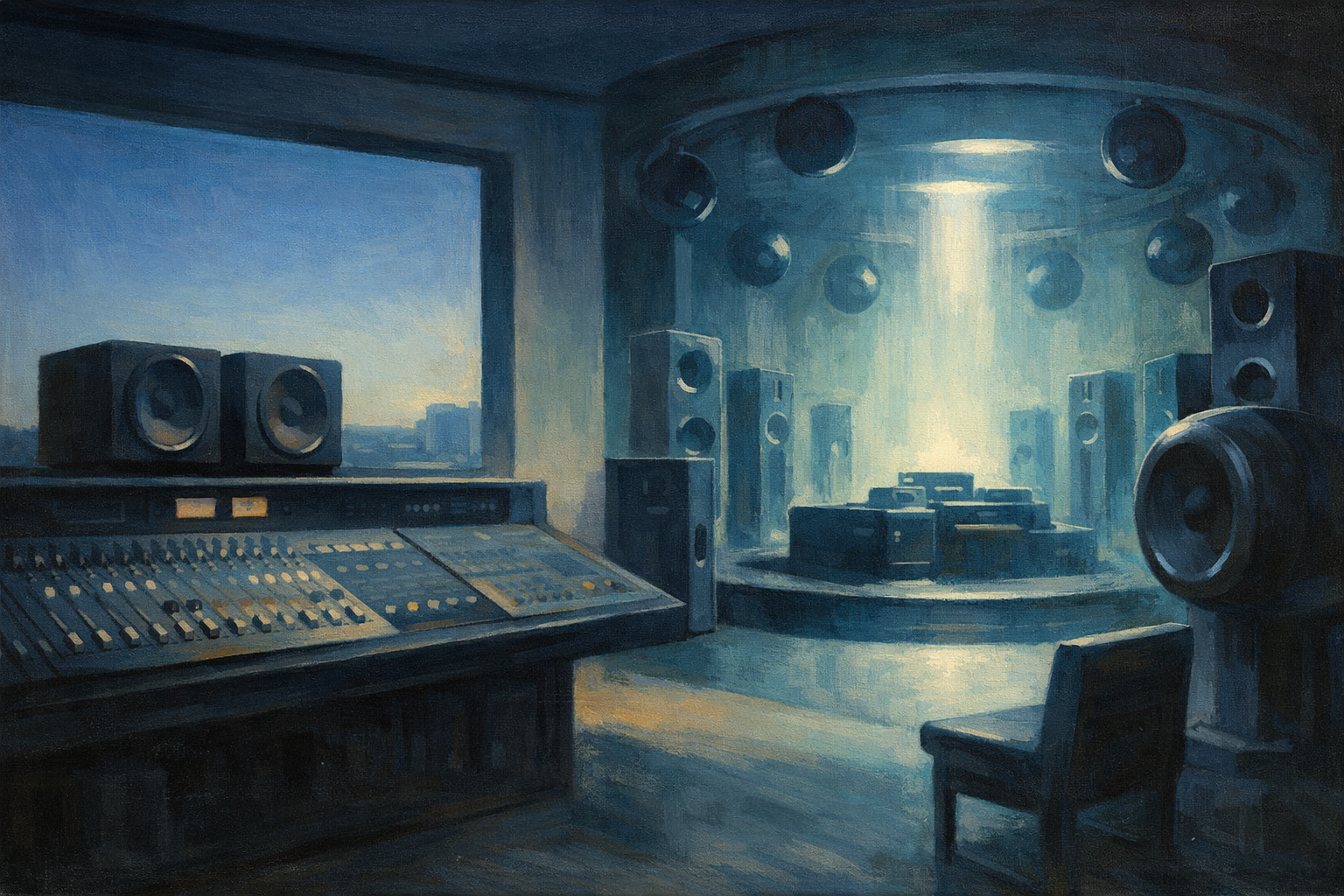
Dolby Atmos mixing is no longer a prestige add-on for major-label releases; it is rapidly becoming the format that separates future-ready productions from stereo-only holdouts. As Apple Music, Amazon Music, Tidal, Netflix, and game engines keep expanding immersive delivery, producers, mixers, and post teams face a blunt reality: if your workflow is not built for spatial audio, your catalog is already aging faster than you think.
Table of Contents
- Why Dolby Atmos Mixing Has Become a Core Production Skill
- What Actually Makes a Great Dolby Atmos Mix
- Tools, DAWs, and Plugins That Matter in 2026
- Delivery Specs for Apple Music, Tidal, Netflix, and Beyond
- Why Music, Film, Games, and XR Are Converging Around Spatial Audio
- The Biggest Dolby Atmos Mixing Mistakes Professionals Still Make
- Frequently Asked Questions
Why Dolby Atmos Mixing Has Become a Core Production Skill
The industry argument is over. Dolby Atmos is not a novelty format, and it is not just for blockbuster films or vanity remixes of legacy albums. It now sits at the intersection of music streaming, premium video, branded content, gaming, and immersive installations. That makes Dolby Atmos mixing less of a niche specialty and more of a practical requirement for modern audio teams.
Streaming changed the incentive structure
When Apple Music pushed Spatial Audio into the mainstream listening experience, the conversation shifted from “Should we offer immersive?” to “Can we afford to be absent from the immersive ecosystem?” Tidal and Amazon Music reinforced that shift, while Netflix, Prime Video, and game platforms continued training audiences to expect space, width, height, and movement as normal parts of storytelling.
For artists and rights holders, the upside is obvious: deeper catalog value, editorial visibility, and stronger differentiation in crowded platforms. For engineers, the shift is more technical. Stereo no longer defines the ceiling of artistic intent. A mix can now place lead vocals, reverbs, synth textures, crowd detail, Foley, and environmental cues into a three-dimensional field that translates across headphones, soundbars, home theaters, and dedicated rooms.
Atmos is also forcing better production habits
One of the best side effects of Dolby Atmos mixing is that it punishes lazy arrangements and rewards clarity. Dense sessions with unresolved masking, over-compressed buses, and vague spatial choices fall apart quickly in immersive formats. Atmos exposes weak decisions. That is a good thing.
A serious immersive workflow demands cleaner stem organization, better dynamic discipline, intentional object use, and a clearer distinction between emotional focus and background support. Teams that invest in that discipline often improve their stereo output too. This is one reason many clients exploring DPM Production’s audio post-production services are not simply chasing a trend; they are modernizing the entire way their audio is built and delivered.
What Actually Makes a Great Dolby Atmos Mix
A great Dolby Atmos mix is not “wider stereo with stuff in the ceiling.” That misunderstanding still ruins too many releases. Immersive sound works when the three-dimensional field serves emotion, narrative, and translation. If movement exists just to prove that movement is possible, the mix usually feels cheap within seconds.
Focus first, spectacle second
The strongest Atmos mixes still answer the same foundational question as stereo: what should the listener care about right now? Lead vocal, dialogue, hook, transient impact, and story cues need stable priority. Atmos expands the canvas, but it does not remove hierarchy. In fact, the bigger the canvas, the more important hierarchy becomes.
For music, that often means keeping the vocal image emotionally anchored while using beds and objects for contrast, envelopment, and depth. For post-production, it may mean giving dialogue a reliable front-weighted intelligibility while atmospheres, score, and effects build a believable world around it. For games and XR, it means balancing directionality with listener comfort and interactive clarity.
Objects should be used because they mean something
Dolby Atmos allows audio elements to exist as objects with positional metadata instead of being permanently locked into channels. That power is often oversold and frequently misused. Not everything deserves object status. If every ear candy layer is flying around independently, the result becomes distracting, inefficient, and harder to translate.
Smart immersive mixers decide which elements need precision and motion and which should live more naturally in the bed. A vocal delay throw, a featured guitar texture, a flyover effect, or a gameplay event may benefit from object-based placement. A diffuse ambience or harmonic support layer may work better as part of a coherent bed.
Translation is the real test
Atmos mixes are judged in multiple playback contexts: full speaker arrays, binaural headphone renders, soundbars, earbuds, and consumer living rooms with uneven acoustics. That means translation is not a final checklist item; it is the central engineering problem.
Engineers should monitor the theatrical or room-based image, but they also need to evaluate binaural behavior, low-end stability, center energy, and the emotional effect of fold-downs. This is where experience, room calibration, and real-world referencing matter. Work done in our professional studio can be validated across formats in a way that guesswork setups simply cannot match.
Too many Atmos releases are built to impress engineers for thirty seconds instead of serving listeners for three minutes. Immersive audio only wins when space reinforces the message.
— DPM Production
Tools, DAWs, and Plugins That Matter in 2026
The software landscape for Dolby Atmos mixing is better than it was even two years ago, but not every tool deserves the same weight in a professional workflow. Hype around “AI spatialization” and one-click immersive upmixing has grown, yet the most reliable results still come from engineers who understand routing, monitoring, metadata, deliverables, and psychoacoustics.
DAWs leading serious immersive workflows
Pro Tools remains deeply established in music and post-production Atmos work, especially where complex routing, collaboration, and dubbing-stage compatibility matter. Steinberg Nuendo continues to be powerful for post, game audio, and immersive mixing thanks to its mature surround features and integration mindset. Logic Pro has expanded immersive accessibility for music creators, which is good for adoption, but access is not the same thing as mastery.
Other environments matter too. Ableton Live can contribute creatively in object-prep and stem generation, Reaper remains astonishingly flexible for advanced users, and game audio pipelines increasingly connect with middleware such as Wwise and FMOD. But for end-to-end commercial delivery, workflow stability still beats novelty.
Plugins and processors that genuinely help
Not every stereo plugin behaves well in immersive contexts. Some create phase relationships or image assumptions that collapse unpredictably in binaural rendering. Tools from Dolby, iZotope, FabFilter, Nugen Audio, Exponential Audio descendants, and established reverbs with surround or immersive support are usually better candidates than legacy stereo chains glued onto every object.
- Dynamic EQ and spectral control for cleaning masking across multiple layers
- Immersive reverbs that create believable spaces without smearing focus
- Loudness and true peak metering for platform compliance and translation
- Renderer-aware monitoring tools for checking binaural outcomes
- Metadata and deliverable utilities for ADM BWF and downstream compatibility
There is also growing demand for efficient format conversion and workflow bridging between stereo assets, immersive sessions, and delivery masters. In that context, tools like the Dolby Atmos Converter can streamline practical parts of the pipeline that otherwise consume hours in repetitive manual prep.
Hardware still matters more than marketing suggests
Immersive work is not only about the DAW. Monitor alignment, room treatment, bass management, and controller accuracy still define whether your decisions are trustworthy. Cheap Atmos setups built around the promise of “good enough” often create expensive revision cycles later. Bad monitoring is not democratization; it is deferred failure.
If you are developing an immersive production chain, it also helps to study the signal capture side. Tools like IR Studio Recorder and other spatial capture solutions become increasingly useful when realism, acoustic space modeling, or convolution-based workflows enter the project.
Delivery Specs for Apple Music, Tidal, Netflix, and Beyond
The creative side of Dolby Atmos mixing gets most of the attention, but delivery is where many projects quietly derail. A mix can sound excellent in session and still fail commercially if it does not align with platform expectations, loudness behavior, metadata handling, or render quality. This is where experienced post teams save time and reputations.
Platform differences are real
Apple Music, Tidal, Amazon Music, and video platforms do not all behave identically. Binaural rendering choices, loudness normalization, codec paths, approved delivery methods, and downstream playback systems all influence what the end user hears. Engineers need to understand both the source master and the listener context.
| Platform | Primary Immersive Context | Common Delivery Consideration | Critical Translation Focus |
|---|---|---|---|
| Apple Music | Spatial Audio for headphones and devices | ADM BWF workflow and binaural behavior | Headphone render balance and vocal focus |
| Tidal | Immersive music streaming | Format compatibility and metadata integrity | Consistency across consumer playback chains |
| Amazon Music | Spatial/immersive music playback | Renderer translation and platform ingestion specs | Low-end stability and object clarity |
| Netflix | Film and episodic Atmos delivery | Dialogue clarity, QC, loudness, printmaster discipline | Narrative intelligibility and room translation |
| Games / XR | Interactive spatial audio | Middleware implementation and runtime behavior | Localization accuracy and player comfort |
Music and post deliverables require different mindsets
Music Atmos workflows often revolve around creative immersion, catalog enhancement, and headphone translation. Film and episodic work demand dialogue priority, strict QC, stem logic, printmaster discipline, and compatibility with downstream localization and versioning. Game audio pushes the challenge further because the final spatial outcome is often dynamic, engine-driven, and player-dependent.
This is why experienced teams build delivery around the destination rather than forcing one master to serve every use case. If you want evidence of how different projects demand different solutions, it helps to review our portfolio and compare the production logic behind music, narrative, and branded content work.
Why Music, Film, Games, and XR Are Converging Around Spatial Audio
The most important shift in immersive audio is not technical. It is structural. Music, screen content, game audio, VR, AR, and XR are no longer evolving in isolation. The same audience moves fluidly between headphones, streaming platforms, social clips, interactive worlds, and spatial computing devices. Audio workflows are being forced to catch up.
Storytelling is becoming format-agnostic
An artist release may need a stereo master, a Dolby Atmos mix, social edits, visualizer audio, live playback stems, and interactive assets for branded or virtual experiences. A game trailer may need cinematic impact, while the game itself demands adaptive spatial logic. A streamed concert may require immersive ambience that later feeds documentary post-production. The borders between “music mixing” and “audio post” are much thinner than many studios admit.
That convergence is exactly why multidisciplinary infrastructure matters. Teams with broad technical coverage can support projects from creative design through deliverables without losing consistency. If you want to understand how that kind of workflow is built, explore our team of specialists and the range of skills required to manage modern immersive projects properly.
Spatial audio in games and XR will influence mainstream expectations
Games, VR, AR, and XR are pushing spatial audio beyond passive listening. Here, sound is not just enveloping; it is informational. Direction, distance, occlusion, and motion can affect gameplay, orientation, tension, and emotional realism. Technologies such as Ambisonics, object-based rendering, HRTF-driven binauralization, and engine-linked environmental acoustics are moving from specialist workflows toward broader adoption.
As more users become comfortable with interactive spatial listening, they bring those expectations back into music and screen media. That is why the future of Dolby Atmos mixing cannot be separated from wider immersive literacy. Audiences are learning to hear space more critically. Producers who still treat immersive audio as a decorative upgrade are missing where the market is going.
The Biggest Dolby Atmos Mixing Mistakes Professionals Still Make
The painful truth is that many weak Atmos releases are not failing because the format is immature; they are failing because the decision-making is immature. The tools are capable. The standards are increasingly stable. The biggest problems now come from rushed adaptation, poor monitoring, and superficial creative thinking.
Mistake 1: Treating Atmos like an upcharge, not a craft
Some studios still position Dolby Atmos mixing as a quick premium upsell built from stereo assumptions. That usually produces gimmicky movement, poor fold-down behavior, and inconsistent renders. Immersive mixing needs dedicated judgment, not a preset chain and a marketing paragraph.
Mistake 2: Overfilling the height field
Height channels and overhead perception are powerful because they are selective. When every synth pad, effect tail, and background layer is sprayed upward, the listener loses orientation. Space without restraint becomes blur.
Mistake 3: Ignoring binaural listening
For many listeners, the first encounter with your Atmos mix will be through headphones. If the binaural render feels hollow, harsh, diffuse, or emotionally disconnected, the project is compromised before the audience ever reaches a full speaker system. Monitoring those outcomes is mandatory, not optional.
Mistake 4: Chasing loudness instead of dimension
Some mixers carry over the worst habits of loudness-war stereo mastering into immersive work. Over-limiting, aggressive bus compression, and low-end inflation flatten the very depth Atmos is supposed to create. Immersive impact comes from contrast, not brute force.
Mistake 5: Forgetting the project lifecycle
Atmos sessions do not exist in isolation. They need naming discipline, stem logic, revision management, and export consistency. The same team may later need alternate versions, platform-specific updates, or integration with other assets. Studios that build sustainable workflows and reliable toolchains, including tailored utilities from our audio tools and products, gain a major advantage over teams improvising every delivery from scratch.
If you are actively comparing workflows, standards, or immersive trends, you can also read more on our blog for deeper coverage of audio post-production, spatial formats, and production technology.
Frequently Asked Questions
Q: What is Dolby Atmos mixing in simple terms?
Dolby Atmos mixing is an immersive audio process that places sounds in a three-dimensional space instead of limiting them to left and right stereo channels. It uses channels, beds, and audio objects to create width, depth, and height. The result can feel more spacious, precise, and cinematic when done well.
Q: Do I need a full speaker room to create a Dolby Atmos mix?
A properly calibrated speaker room is still the most trustworthy environment for professional Dolby Atmos mixing, especially for critical placement and translation decisions. However, many parts of the workflow can be developed with headphone monitoring and renderer-based checks. The key is understanding the limitations of each monitoring method and validating the mix in a controlled professional space before release.
Q: Is Dolby Atmos only useful for music streaming?
No. Dolby Atmos is used across music, film, television, advertising, games, and immersive experiences such as VR and XR. Its value changes by context: in music it can enhance emotion and depth, while in post and games it can improve storytelling, localization, and realism.
Q: How is Dolby Atmos different from stereo mastering?
Stereo mastering optimizes a two-channel mix for consistency, loudness management, tonal balance, and playback translation. Dolby Atmos work involves object-based or bed-based spatial decisions, immersive translation, and platform-specific rendering considerations. It is not just another mastering preset; it is a different production framework with different creative and technical priorities.
Q: Which DAW is best for Dolby Atmos mixing?
There is no single best DAW for every project, but Pro Tools, Nuendo, and Logic Pro are among the most widely used for Dolby Atmos mixing. The right choice depends on your delivery target, routing needs, collaboration requirements, and whether the work is music, post-production, or game audio. Workflow reliability matters more than brand loyalty.
Q: Can an old stereo catalog be converted to Dolby Atmos?
Yes, but quality depends heavily on the available stems, multitracks, and the creative goals of the project. A meaningful Atmos version is usually built from properly separated elements rather than from a simple automated upmix. When the source material is well organized, catalog revitalization through immersive mixing can be very effective.
The rise of Dolby Atmos mixing is really the rise of a more demanding audio culture. Listeners now encounter immersive sound across music, streaming video, games, and spatial computing, and that exposure is raising expectations for everyone who delivers audio professionally. The old shortcuts still exist, but they are easier to hear and harder to defend.
The practical lesson is simple: immersive audio only works when the room, the workflow, the engineering decisions, and the delivery standards all support each other. That is where experience matters most. From music releases to narrative post and advanced spatial workflows, DPM Production approaches immersive work as a craft built on technical discipline, not a buzzword-driven accessory.
If you are planning an Atmos release, updating a catalog, building a cross-platform spatial pipeline, or simply trying to avoid the expensive mistakes that plague many first-time immersive projects, get in touch with our team. We can help translate the promise of immersive audio into results that actually hold up in the real world.
Ready to Take Your Audio to the Next Level?
Whether you’re mixing in Dolby Atmos for the first time or need expert spatial audio post-production for your next project, DPM Production has the studio, tools, and expertise to deliver world-class results.
👉 Explore Our Services
|
👉 Contact Us Today
|
👉 See Our Studio